First Signature: Great Romantics

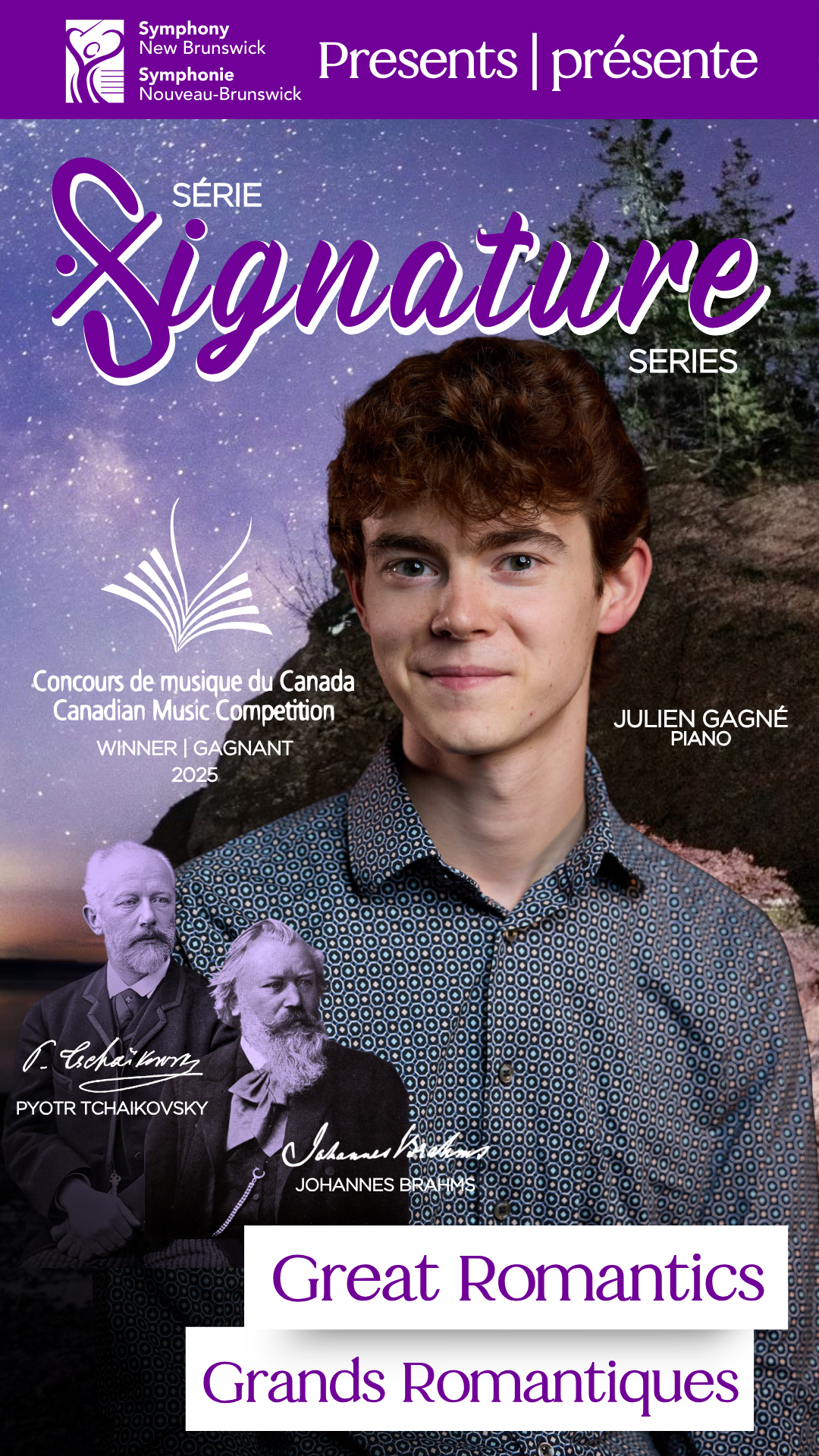
Table of Contents
President’s Remarks
Reid Parker

Welcome to Symphony New Brunswick’s 2026-2027 season. Our concerts this year will have something for everyone and we hope you enjoy them as much as we have had in planning them.
Significant increases in funding from both the Canada Council and the Province of New Brunswick have provided SNB with more flexibility in organizing our presentations. We are very grateful for this recognition of SNB’s value to the cultural life of the province.
But, as we all know, our economy is experiencing inflationary pressure not of our own doing making it more difficult to do things taken for granted a short time ago. Symphony orchestras and their musicians are not immune to these cost pressures and we continue to rely on the generosity of our patrons to help as much as they can when asked to do so.
A saving grace has been the growth in Symphony New Brunswick Foundation’s assets which will permit contributions to the Symphony of close to 40% of the Symphony’s operating costs. The Foundation is approaching another Canadian Heritage deadline for a matching grant application and we urge anyone who can help boost the pool of funds to be matched to contact me as soon as possible. Growth in the Foundation means growth in the Symphony.
Our opening concert commemorates Bob McCausland, one of the founders of SNB who recently passed. Bob was the first conductor and subsequently the first Concertmaster of the Symphony. He remained with SNB as a violinist until he retired in 2017. His contribution to the Symphony will be remembered.
Reid Parker
President, Symphony NB
Welcome Message
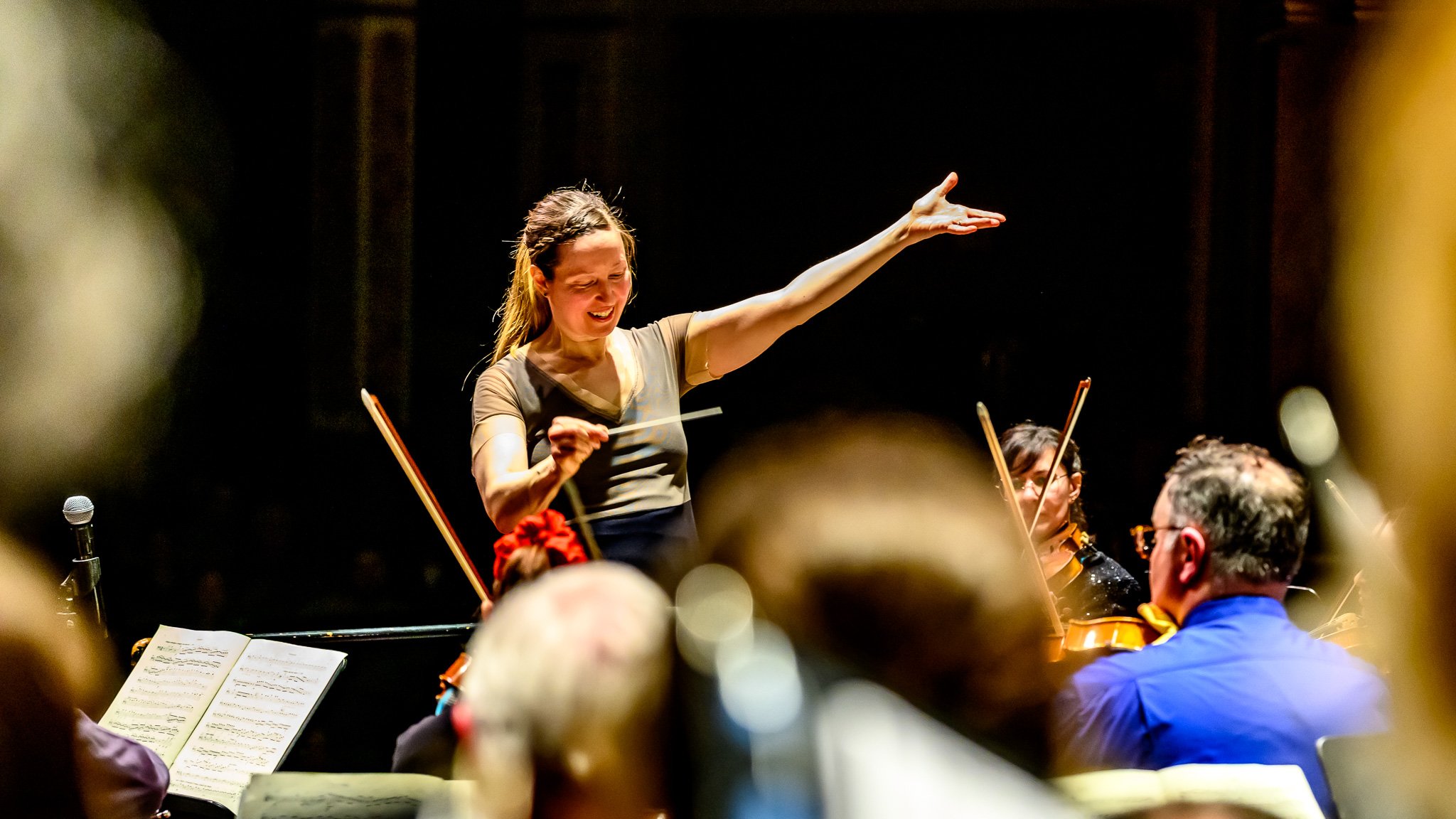
Mélanie Léonard, Music Director

Dear friends,
As always, it is my great pleasure to welcome you to a new season of timeless masterworks and exciting discoveries.
In this season’s Signature Series, Canadian talent, emerging and diverse voices, and New Brunswick come together to offer you a rich and meaningful concert experience. From the grandiosity of the great Romantics to the opulence of the Golden Era; from heartfelt music exploring the different faces of love, to works shaped by defining presence and art‑inspired imagination — and without forgetting Verdi’s epic Requiem — we are bringing you a season rich in emotion and community‑uplifting moments.
Our Virtuoso Series once again showcases exciting repertoire performed by the Saint John String Quartet, Ventus Machina, and Resonance New Music. Virtuosity will be on full display, while intimate concert spaces provide a unique opportunity to experience music up close.
As we navigate challenging times, don’t we owe it to ourselves to pause and embrace a moment of grace? We are deeply grateful for your trust, your support, and your presence. You make these moments not only possible — you make them come alive.
We look forward to welcoming you to the concert hall!
À bientôt,

Mélanie Léonard
Music Director

Biography: Mélanie Léonard
Born in Montreal, Mélanie Léonard is the Music Director of Symphony New Brunswick and Assistant Professor of Instrumental Conducting at McGill University’s Schulich School of Music, where she also conducts the McGill Contemporary Music Ensemble. She previously served as Resident and Associate Conductor of the Calgary Philharmonic Orchestra and as Music Director of the Sudbury Symphony Orchestra.
As a guest conductor, she has worked with many prestigious institutions, including the Montreal Symphony Orchestra, the Toronto Symphony Orchestra, Les Violons du Roy, the Orchestre Métropolitain, the National Arts Centre Orchestra, and the Orquestra Sinfônica Municipal de São Paulo in Brazil.
In 2026, she made her débuts at Festival Classica and the Festival d’Opéra de Québec, conducting the chamber opera L’hiver attend beaucoup de moi by Laurence Jobidon.
Ms. Léonard has conducted orchestras for soundtracks including Aura at Montreal’s Notre-Dame Basilica, Paradise City in South Korea, and Cirque du Soleil’s Land of Fantasy in Hangzhou, China.
Over the course of her career, she has founded three organizations dedicated to contemporary music: Prima Ensemble, the Wild West New Music Ensemble, and the Calgary New Music Festival.
Ms. Léonard was the first woman to complete a doctorate in orchestral conducting at the Université de Montréal. In 2012, she received the Canada Council for the Arts’ Jean‑Marie Beaudet Award for Orchestral Conducting.
Sponsors & Partners

Symphony New Brunswick wishes to thank and acknowledge the following partners:












Support Your Symphony
Donations to SNB directly fund operations. By supporting today you are helping us continue to present top-notch performances and expand our dynamic programs, including those in schools and communities. Thank you for helping more people to experience the beauty and power of live orchestral music!
Guest Artist
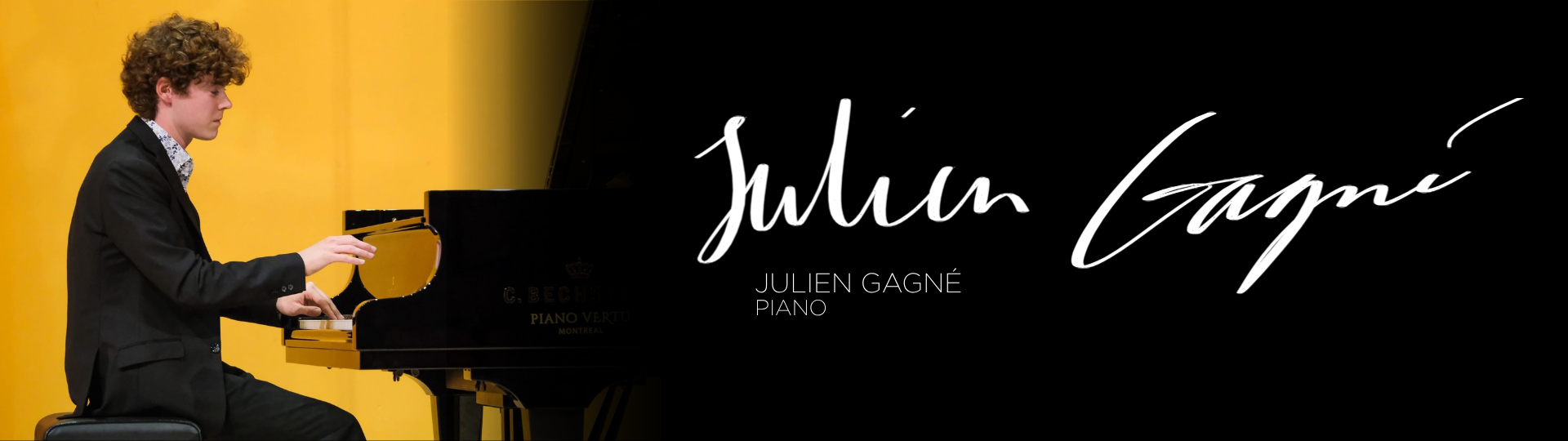
Julien Gagné, Piano
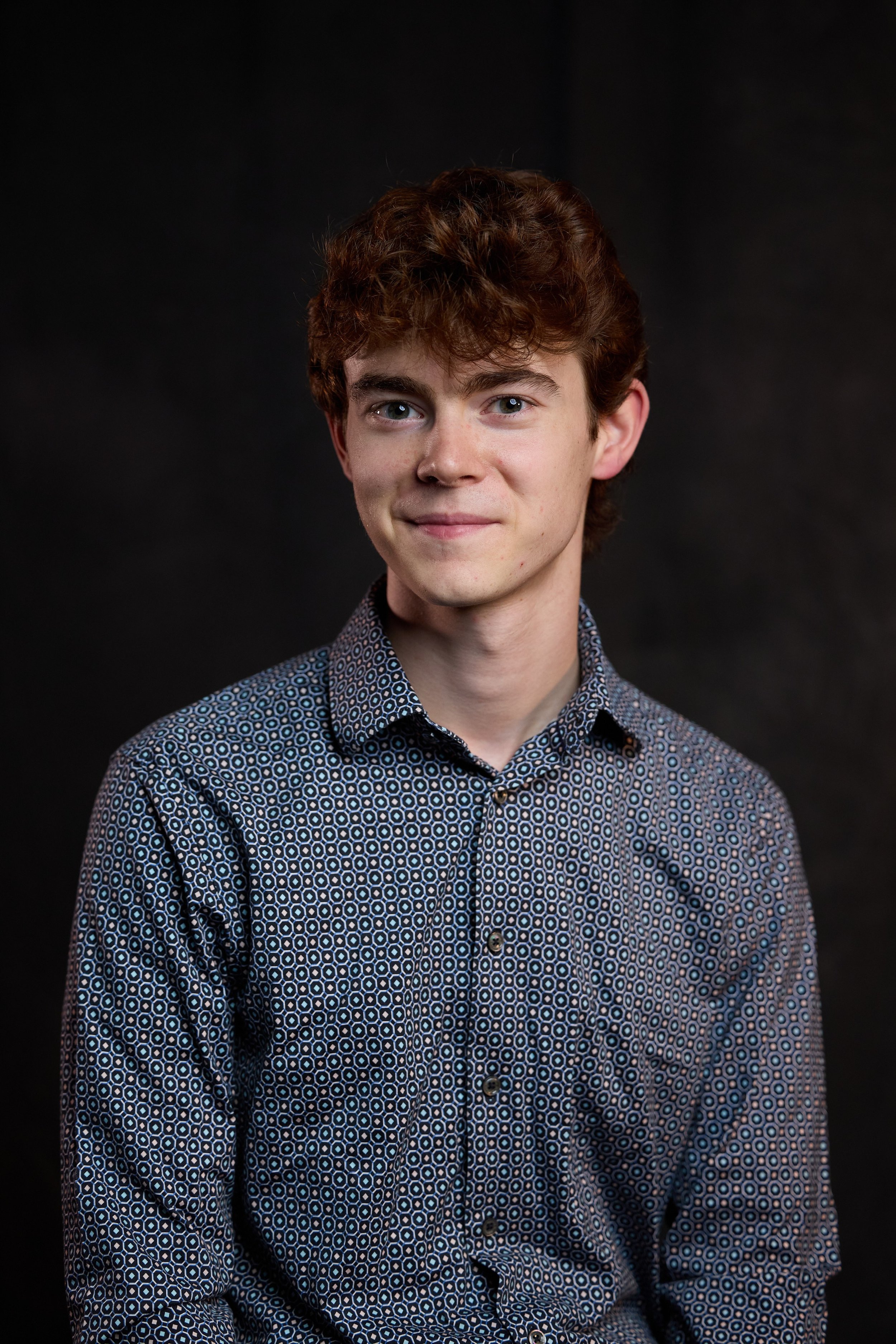
Having completed his Bachelor’s degree under the guidance of Richard Raymond at the Conservatoire de musique de Montréal, Julien Gagné is now pursuing a Master’s degree at the Guildhall School of Music and Drama in London, studying with Ronan O'Hora. He has also studied with Line Villeneuve and Tristan Longval-Gagné. Over the years, he has won numerous first prizes in prestigious competitions, including the Concours de musique de la Capitale, the Festival-concours de musique de Sherbrooke, the Grand Prize at the Canadian Music Competition, and the national piano competition of the CFMTA (Canadian Federation of Music Teachers Association). Internationally, he was a finalist at the “Città di San Donà di Piave” International Piano Competition in Italy in 2025. More recently, he
distinguished himself at the 2026 edition of the Prix d'Europe, where he was awarded second prize, the Auguste Descarries Prize and the Chapelle historique du Bon-Pasteur Prize.
Furthermore, he is a recipient of the AIDA scholarships awarded by the Jeunesses Musicales Canada Fondation. He has also worked with many renowned pianists in several masterclasses, such as André Laplante, Benedetto Lupo, Christian Blackshaw, Janina Fialkowska, Antonio Pompa-Baldi and Éric Lesage. As a soloist, he has also performed with the Orchestre symphonique des jeunes de Sherbrooke (2022), the Orchestre de l'Université de Sherbrooke (2023), the Sinfonia de Lanaudière (2024), and Les Violons du Roy (2024).

This Evening’s Program
Symphony New Brunswick
Mélanie Léonard, Music Director
1 ) Christine Donkin (b. 1976) [2’]
Hopewell Cape
2 ) Johannes Brahms (1833 - 1897)
Symphony No. 3 in F Major, Op. 90
I. Allegro con brio
II. Andante
III. Poco allegretto
IV. Allegro — Un poco sostenuto
3 ) Pyotr Tchaikovsky (1840 - 1893)
Piano Concerto No. 1 in B minor, Op. 23
Julien Gagné, piano
I. Allegro non troppo e molto maestoso – Allegro con spirito
II. Andantino semplice – Prestissimo – Tempo I
III. Allegro con fuoco – Molto meno mosso – Allegro vivo
Program Notes
Reid Parker
Christine Donkin (b. 1976)
Hopewell Cape
Hopewell Cape, a two-minute quasi-fanfare for orchestra, was a co-commission by the Toronto Symphony Orchestra and Symphony New Brunswick to celebrate Canada’s 150th anniversary. The TSO commissioned a number of similar works with other orchestras which were performed across the Country. When asked by the TSO to participate, SNB was given the opportunity to select the composer and, having performed several other compositions by Christine Donkin, she was chosen. The world premiere occurred in New Brunswick in March 2017 and the music was performed by the Toronto Symphony in early April.
The music is suggestive of the swirling tidal currents around the Rocks at Hopewell Cape and, although very brief, Donkin’s neo-romantic composition would be an effective start to any concert.
Johannes Brahms (1833 - 1897)
Symphony No. 3 in F Major, Op. 90
The Brahms Third Symphony was composed in 1883, six years after the Second Symphony. During this interval, he composed several of his best works including the Violin Concerto in D, the Second Piano Concerto and his two famous concert overtures, the Tragic and the Academic Festival. So, at age fifty, he was experienced and artistically confident. While not probably performed as often as his other symphonies, the Third is considered by some, including Antonin Dvorak, as his finest. The learned Tovey wrote, “There is certainly no reason why the music, as music, should not be among the most popular that Brahms ever wrote.”
At the very outset, Brahms states the notes F-A(Flat)-F, thought to be his personal motto, “frie aber froh (free but happy)”. This motif recurs throughout the Symphony but is subtly altered as the Symphony progresses. Although stated assertively at the opening, its prominence soon fades into the texture of the Symphony, and it never reappears triumphantly. At the end, it is restated, not as a proclamation, but as a quiet denouement. Does this have any extra-musical meaning? If so, it is subtle. Brahms was now middle-aged and had established himself as a major figure in Germanic music; but his life was not without its disappointments and personal angst. So perhaps the evolution of the motto can be simply explained as an emotional process — self-assertion has mellowed into quiet satisfaction and acceptance of his place in life.
This thought may be reflected in the way the music unfolds. Although the Symphony follows the traditional four-movement format, the third movement, normally a robust scherzo, is unusually subdued — a reflective ternary-form movement without a strongly contrasting middle section. The finale is also unusual in that it exhibits the turbulence one would expect in a closing sonata-form movement, but its extended coda is anything but turbulent — its energy gradually ebbing away into a lovely F Major chord at the very end. The beauty of these final notes reminded this writer of the E-Flat Major ending of Wagner’s Gotterdammerung, perhaps not a far-fetched analogy given Brahms admiration for Wagner’s music. Differing keys but similar resolutions. Both composers chose beauty over triumph as a way of stating finis to an intense emotional journey. Brahms’ journey was on a much smaller scale, but with similar passion and, as time would tell, he had much more to say before his composing career came to an end.
What is most compelling about this symphony, aside from its lovely melodies, is the orchestration. Brahms is noted for the thick texture of his orchestral music, but in the Third Symphony, the texture is leaner and the winds often serve as independent voices rather than being overwhelmed in the tutti passages.
The performances of the Brahms Third Symphony are Symphony New Brunswick premieres. It is hoped it will not be another four decades before we hear it again.
Pyotr Tchaikovsky (1840 - 1893)
Piano Concerto No. 1 in B minor, Op. 23
The first three and a half minutes of this concerto are so well-known and beloved that it is disappointing this thrilling passage or some of its thematic material is not repeated later. Upon hearing it, the listener expects its main theme to be subsequently developed in grand sonata style, but, instead, it vanishes like a phantom. What was Tchaikovsky thinking? Was this done deliberately or was it a result of the composer’s immaturity? To this latter point, although this was his first concerto, the composer was in his mid-thirties and already experienced in his craft, so this dramatic, theatrical beginning was not a juvenile mistake. Although other composers like Beethoven, Schumann, Liszt and Grieg tinkered with accepted norms for beginning their concertos, Tchaikovsky’s abandoned start is unique in the literature. Moreover, Tchaikovsky revised the concerto twice and could have dropped the introduction but wisely didn’t.
The concerto does not suffer as a result. The remaining 35 minutes are so vital and dramatically constructed that the listener soon becomes engrossed in the music and the omission of the opening material almost goes unnoticed. Apologists for Tchaikovsky’s unconventional approach suggest there are subtle motivic hints of the opening theme throughout the concerto, but these are illusory — unconvincing, academic grasping for musical straws.
The concerto’s early history is a story in itself. Tchaikovsky played the work shortly after its completion in early 1875 for Nicolai Rubenstein, his teacher at the Moscow Conservatory. Later, Tchaikovsky wrote a detailed account of what happened, “It turned out that my concerto was worthless and unplayable; passages were so fragmented, so clumsy, so badly written that they were beyond rescue; the work itself was bad, vulgar; in places I had stolen from other composers; only two or three pages were worth preserving; the rest must be thrown away or completely rewritten.” Angry but undeterred, Tchaikovsky didn’t change a note and dedicated the concerto to Hans von Bülow who premiered it in October 1875 in Boston with conductor Benjamin Johnson Lang on the podium. It was enthusiastically received by the audience, less so by the critics, but soon it gained world-wide popularity and has retained it ever since. Even Rubenstein eventually changed his opinion.
The minor revisions Tchaikovsky made in 1879 and 1890 were in response to suggestions from prominent pianists and had nothing to do with the initial negative criticism. A final point concerning the melodic content of the concerto concerns the use of Russian folk songs in the score. Some scholars suggest some themes in the opening movement are shaped similarly to known Ukrainian folk songs, but no literal quotations appear. However, there is no mistaking Tchaikovsky’s style and its Russian-sounding character.

Endowed Chairs
Second Chair First Violin
Dr Tom Condon Memorial Chair
Principal Second Violin
Miles and Eunice Kierstead Memorial Chair
Second Chair Second Violin
Li-Hong Xu Memorial Chair
Principal Viola
Dr. Mary Pedersen Endowed Chair
(In honour of New Brunswick's wonderful violists who weave the charm and mellow tones of the viola into the heart of the ensemble, casting a compelling magic that wondrously binds the music together)
Section Viola
Reid & Jaqueline Parker Endowed Chair
Principal Cello
BMO Financial Group Endowed Chair
Second Chair Cello
The Tom & Lisa Gribbons Endowed Chair
Section Cello
The Marion Isabel Pedersen
& Sister Marie Estelle Memorial Chair
Principal Flute
The Margaret and Wallace McCain Family Chair
Principal Oboe
Mary E. Pedersen MD, Prof Corp Endowed Chair
Principal Clarinet
In Honour of Suzanne Farrer Irving
Principal Bassoon
Pannell Family Endowed Chair
Principal Trumpet
Wallace, Norma and John MacMurray
Memorial Chair
Second Trumpet
The Saint Mary’s Band and Bruce
Holder Jr. Memorial Chair
Principal Timpani
Philip W. Oland Memorial Chair
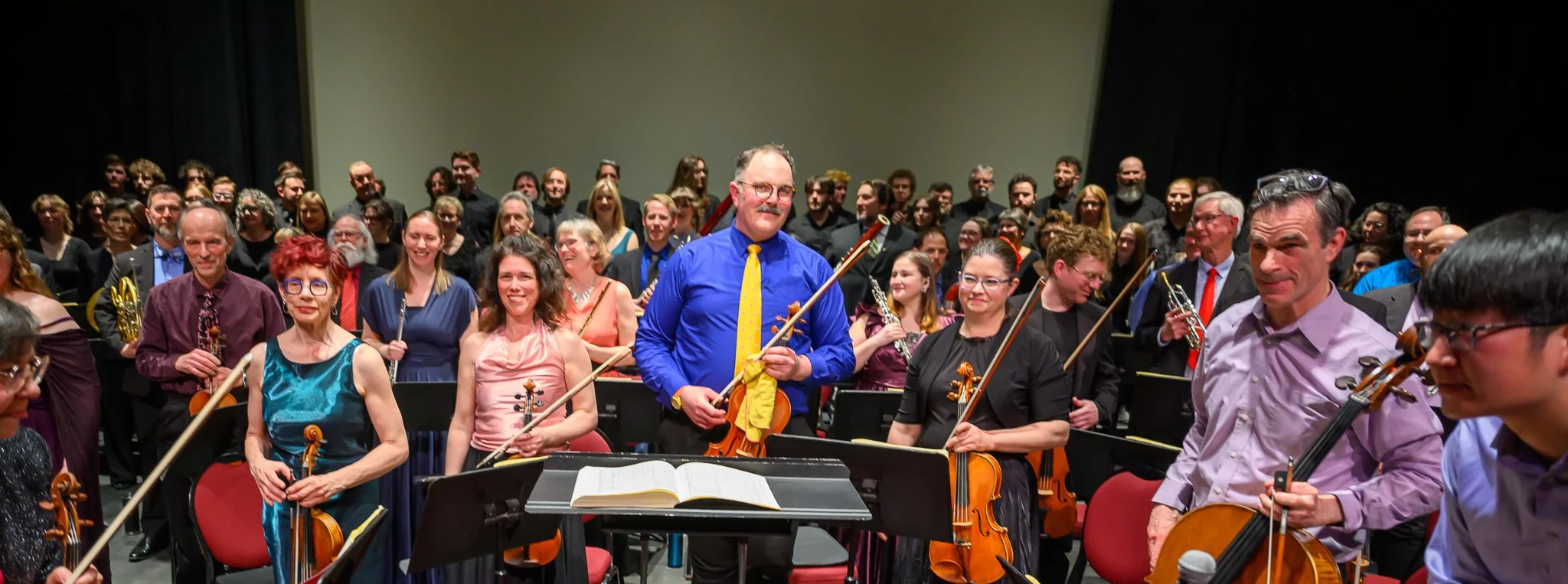
Symphony NB Musicians
*Principal or acting principal, ^Core musician
Violin I
Dani Sametz*^,
Concertmaster
Lucia Rodriguez
Timi Levy
Dave Adams
Hok Kwan
Ali Leonard
Violin II
Nadia Francavilla*^
Sara Liptay
Katherine Moller
Aida Tisler
Hrvoje Tisler
Victor Vivas
Viola
Robin Streb*
Stephen Mott
Mark Kleyn
Geoff McCausland
Cello
Chris Yoon*^
John Buckley
Sonja Adams
Ellen Buckley
Bass
Andrew Reed Miller*^
Mihai Onete
Flute
Danièle Saika-Jones*
Naomi Ford
Oboe
Carlos Avila*
Daniella Tejada
Clarinet
James Kalyn*
David Scott
Bassoon
Neil Bishop*
Yvonne Kershaw
Contrabassoon
Ismael Vitriago
Horn
Jon Fisher*
Jon Astley
Bill Costin
Peter Sametz
Trumpet
Rob Dutton*
Matt Ross
Trombone
Jim Tranquilla*
Aaron Good
Bass Trombone
Richard Kidd
Timpani
Joel Cormier*^
Lifetime Members
David Adams - Concertmaster Emeritus
Sonja Adams - Principal Cello Emerita
Christopher Buckley - Principal Viola Emeritus
Symphony NB Donors
Symphony New Brunswick warmly thanks all of its donors for their generous support in the last 12 months.
-
Léona Arsenault
Christopher Buckley
Suzanne Irving
J.F.N. & Alice Jones
Ian MacFarquhar
Dr. Gregg McLean
Li Hong Xu
-
Friend of Symphony NB
Mary E. Pedersen MD, Prof Corp
Pannell Family Foundation
-
Sisters of Charity of the Immaculate Conception
Tim Blackmore
Jonathan & Haleen Franklin
Duncan MacDonald
Reid & Jacqueline Parker
Michael & Margaret Wennberg
-
Sonja & David Adams
Michele & Anthony Flarow
Margaret & Bill Jones
-
Dr. J. Arditti
William Costin
David & Roxie Meek Foundation
Tony & Margaret Fitzgerald
Howard & Jane Fritz
Kathryn Hamer Edwards
James D & Lynn Irving
Brian McCain
Susan & Winston Mott
Terry Nikkel
Allen & Carol Rosevear
-
David & Jane Barry
Louise Beaulieu
Wladyslaw Cichocki
Anne Marie Creamer
Daphne Flanagan
Dr. Peter & Sheila Gorman
Martha Louise Harrison
Suzanne Irving
Jennifer Landry
-
Lise Anderson
Dr. Barry Beckett
Iris E C Bliss
Diane Brideau-Laughlin
John Buckley
Joan P. Creamer
Phil & Maxine Dadson
Jim & Donna Dysart
M. Eileen Gallagher
Gerald Golschesky
Grant Heckman
Philip & Roberta Lee
Barbara MacKay
Gordon Mason
Vaughn McIntyre & Pat Pulley
Darren McLeod
Katherine Moller
Susan Montague
Brenda Noble
Inge Pataki
Diana Rayworth
Cathy Rignanesi
Angela Smith
Brian R Steeves
Tom Stewart
James & Mary Stokes-Rees
Hazel Webb
-
Brunswick Brokers
N. Crevier C.P. Inc
Sussex Choral Society
Whittaker & Associates
Jim & Jane Baird
John Ball
Peter Caddell
David Charters
Karon & James Croll
Peter & Deana Gadd
Richard Gibson
Susan Gray
Lindsay Hazen
Jaroslaw Iwanus
E. Shani Jones
Joanne Keith
Kathleen Keith
Bill Kent
Ursula & Tony Lampart
Claire Lepage
Trevor McLain
David Murray
Carolyn & David Nielsen
Ugo Okoye
Jane Paciga
Germaine Pataki-Theriault
Jeff Patterson
Kathryn Reed-Garnett
Christine & Richard Sancton
Linda & Greg Sprague
Barry Thompson
-
Anonymous
Michelle Anderson
Judith Begley
Len Brunka
Angela Campbell
Wendy Duschenes
Carol & Paul Egan
Gail Everett
Keith Facey
Susan Fortune
Dana & Phyllis Hanson
Bob Higgins
Colleen Lang
Jasen Loiselle
Lindsay Mains
Gilles Melanson
Grace Olds
Graeme Roderick
Dr. Eckart & Donna Schroeter
Patricia Scribner
David Seely
John Shea
Jane Stewart
Liane Thibodeau
Bonnie Williams
Symphony NB Foundation
Symphony New Brunswick warmly thanks all of its donors for their generous support in the last 12 months.
Our Mission
The Symphony New Brunswick Foundation is an independent charity that supports Symphony New Brunswick through an endowment that is held in perpetuity. As its largest single annual donor, we give Symphony NB financial sustainability and, through its support, the Foundation enables the Symphony to deliver a more diversified musical program to the residents of New Brunswick. The Foundation’s endowment assets are held and managed by an independent Board of Directors.
-
Bank of Montreal
Isles Foundation, on behalf of Mrs. Suzanne Irving
The McCain Foundation
The Pannell Family Foundation
Jonathan & Haleen Franklin
Tom & Lisa Gribbons
Ronald Lees & Miranda Lees
Donald G. Mitchener FCPA, FCA
Reid & Jacqueline Parker
Dr. Mary Pedersen
-
The MacMurray Foundation
River Philip Foundation
The Estate of Phyllis Sutherland
David & Sonja Adams
Joseph Aicher
Lane & Diane Bishop
Doris Chesley
Lucinda Flemer
Kathy McCain
Frank McKenna
Derek & Jacqueline Oland
John & Lois Thompson
-
Chesley Family Foundation
Maple Leaf Homes
Royal Bank Foundation
David & Jane Barry
Terence & Jane Bird
David & Peggy Case
Wladyslaw Cichocki
The late Marion Elliot
Kathryn Hamer-Edwards
Sadie Lu Harley
Peter Hyslop
John Irving
David Jamieson
Margaret Keddy
Manon Losier
Ian & Carole MacFarquar
Eleanor & Trevor Marshall
Allison & Clare McCain
Geoff Mitchell
Susan Montague
Donne Smith
-
Sylva Hesse Foundation
Langdon Professional Corporation
Ed & Melissa Barrett
William & Jocelyn Barrett
Francis Ervin Estate
Jane M. Fritz
Signe Gurholt
Gregor & Charlotte Hope
David & Judy Marr
Ron Outerbridge
Gregory & Karen Parker
Cathy & Brian Rignanesi
Brian & Anne Wheelock
-
UNI Cooperation Financiers
Joshua Adams
Katherine Asch
Susan Atkinson
Brian & Vicky Baxter
Wayne Bell
Denise & Geoff Britt
Ellen Buckley
John & Adrienne Buckley
Margo Campbell
Anne Marie Creamer
Sally Dibblee
J. Anthony Fitzgerald
Jane M. Fritz
Peter Gadd
Richard Gibson
Gerald Golschesky
David & Donna Goss
Kathryn Hamer-Edwards
David & Jane Hay
Daniel Lessard
Duncan MacDonald
Darren McLeod
Peter Lyman & Judith Moses
Dora Nicinski
David & Carolyn Nielsen
Gerrit van Raalte
Richard & Christine Sancton
Andy Savoy
Catherine Sidney
William & Joan Smith
Greg & Linda Sprague
Ian & Karen Stead
-
Brookfield Infrastructure Partners
Les Religieuses de Notre-Dame du Sacré-Cœur
Lockhart Foundation
Sabian
Sisters of Charity of the Immaculate Conception
Diane Adams
David Addleman
Karin Aurell
David Beaudin
Ron & Janet Buckley
Nicola Carter
Michael Chandra
Richard & Yeonsuk Cho
Marilyn Dalton
Jacques & Bernadette DeGrace
Jocelyn Deichmann
Michele & Tony Flarow
Dwight Fraser
Macgregor Grant
Carolyn Irving
Suzanne Irving
Mary Ann Kneeland
Tyler Langdon
Jeanette Landry
Jennifer Landry
Paul Leger
Lise Legér-Anderson
Penny & Stephen McCain
Gunter Metz
Wendy Nielsen
Jim O’Sullivan
Margaret Roy
Barbara Smith
John Tidswell
-
E. Gary Atkinson
Walter Ball
Christopher Buckley
Pauline Cormier
James G. Crooks
Edna Dibblee-Wellner
Peter Edwards
Ruth Frank
“Rory” Grant
Bernadette Hedar
Douglass Hughes
Suzanne Irving
Barbara Jean
Ian MacFarquhar
Donald Marshall
Gloria Melanson
David Nicholson
Nickolaj Holm & Marion
Isabelle (Murchison) Pedersen
Ann Marie Robertson
Tiina Hele Runkla
John Huggard Sherwood
Terrence Stewart
Joseph Francis Wagner
Erik T. P. Wennberg
Evelyn Williston
Sandra Wright
Li-Hong Xu
Leadership
Honourary Patron
The Honourable Louise Imbeault
33rd Lieutenant Governor of New Brunswick
Board of Directors, Symphony New Brunswick
Reid Parker, President & Board Chair
Cathy Rignanesi, Treasurer
Sandrine Siewe, Secretary
Edmund Dawe
Kathryn Hamer
Rick Hancox
Peter Hyslop
Lise Léger-Anderson
Gilles Melanson
Germaine Pataki-Thériault
Kara Stonehouse
Michael D. Wennberg
Board of Directors, Symphony New Brunswick Foundation
Reid Parker, President & Board Chair
Susan Dewar, Treasurer
Jennifer Adam, Secretary
John Fitzpatrick
J. Paul Legar
Ron Outerbridge
Administration
Mélanie Léonard, Music Director
Peter Sametz, Director of Operations & Administration
Adam Masson, Manager of Marketing & Community Relations
Joël Cormier, Manager of Personnel & Production
Stephen Sametz, Stage Manager
Jon Fisher, Librarian
Volunteer Support
Rick Sancton, Donations
Linda Sprague, Friends of the Symphony (Fredericton)
Up Next
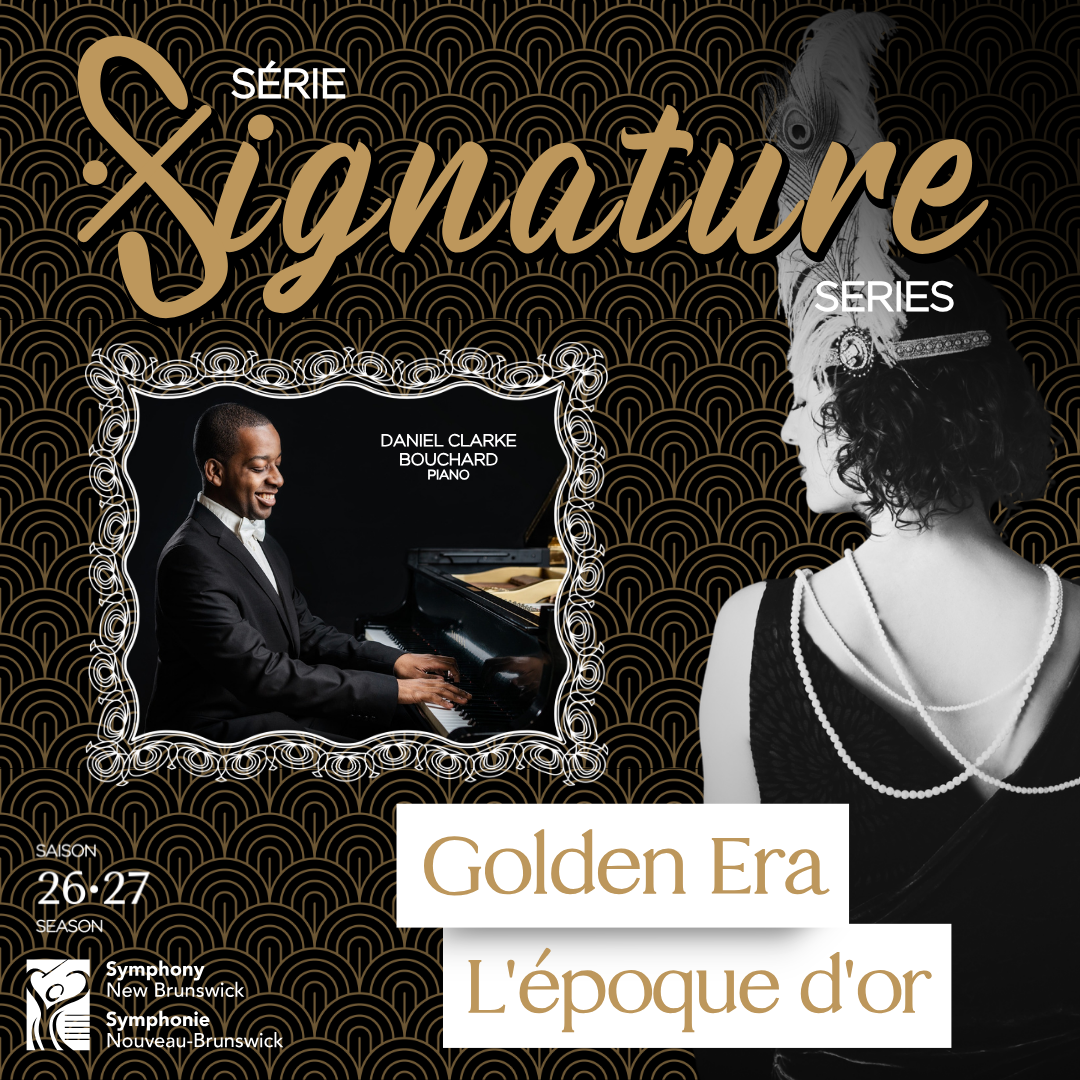
Imperial Theatre
12 King Sq. S
Saint John, NB
October 19 @ 7:30pm
Théâtre Bernard-Poirier
Centre Communautaire Sainte-Anne
715 Priestman St.
Fredericton, NB
October 20 @ 7:30pm
Capitol Theatre
811 Main St.
Moncton, NB